Introduction
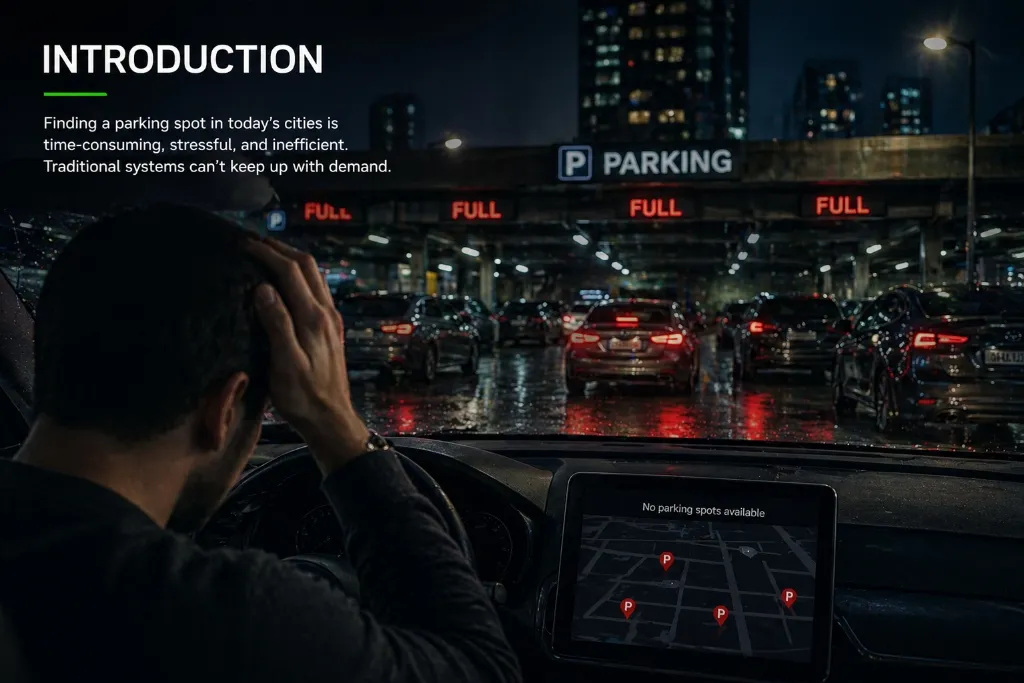
Finding a parking space shouldn’t feel like a challenge—but in most cities, it still is. Drivers waste time circling, businesses lose customers, and cities face unnecessary traffic.
This is where smart parking systems come in.
In this guide, we’ll break down what a smart parking system is, how it works, and why it’s becoming essential for modern cities, businesses, and even private spaces.
What is a Smart Parking System?
A smart parking system is a technology-driven solution that helps detect, monitor, and manage parking spaces in real time.
Instead of guessing where to park, drivers can instantly see available spaces through connected systems. At its core, a smart parking system connects physical parking spaces with digital visibility.
How Does a Smart Parking System Work?
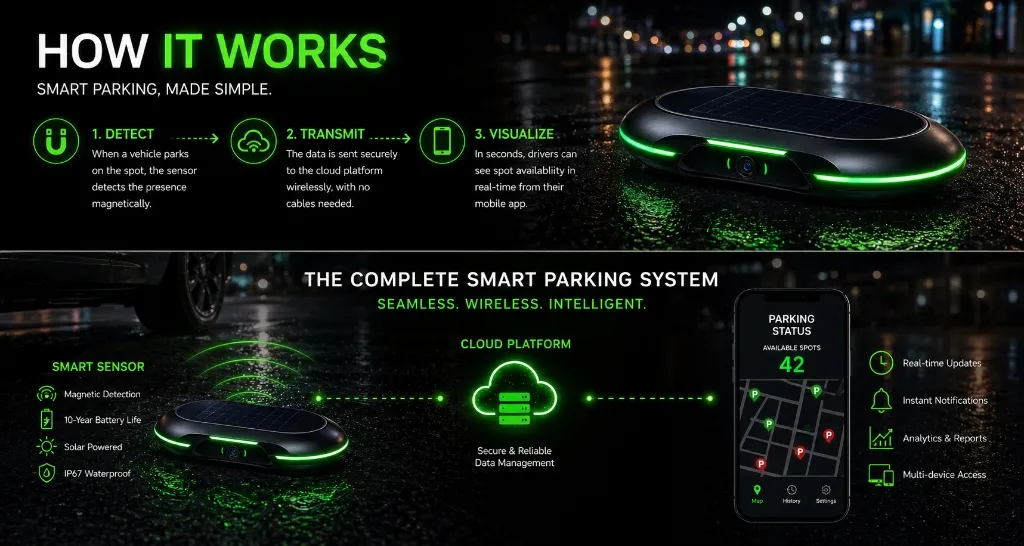
A typical smart parking system includes several key components working together:
Detection Layer
Sensors are placed on or near parking spaces to detect whether a spot is occupied or available. These sensors continuously monitor the space and update its status in real time.
Communication Layer
The data collected by sensors is transmitted through a network (wireless communication systems) to a central platform.
Processing Layer
All incoming data is processed and stored in a centralized cloud system, allowing real-time updates and insights.
User Interface Layer
Drivers and operators can access this information through Mobile apps, Web dashboards, and Digital maps. This allows users to:
- Find available parking instantly
- Navigate directly to a spot
- Monitor parking usage
Benefits of Smart Parking Systems
- Time Saving: Drivers no longer need to search for parking—available spaces are visible instantly.
- Traffic Reduction: Less circling means less congestion in busy areas.
- Better Parking Management: Businesses can manage parking spaces more effectively and improve customer experience.
- Smart City Integration: Smart parking plays a key role in building more efficient and connected urban environments.
- Data & Analytics: Operators can analyze usage patterns, peak hours, and optimize space utilization.
Common Use Cases
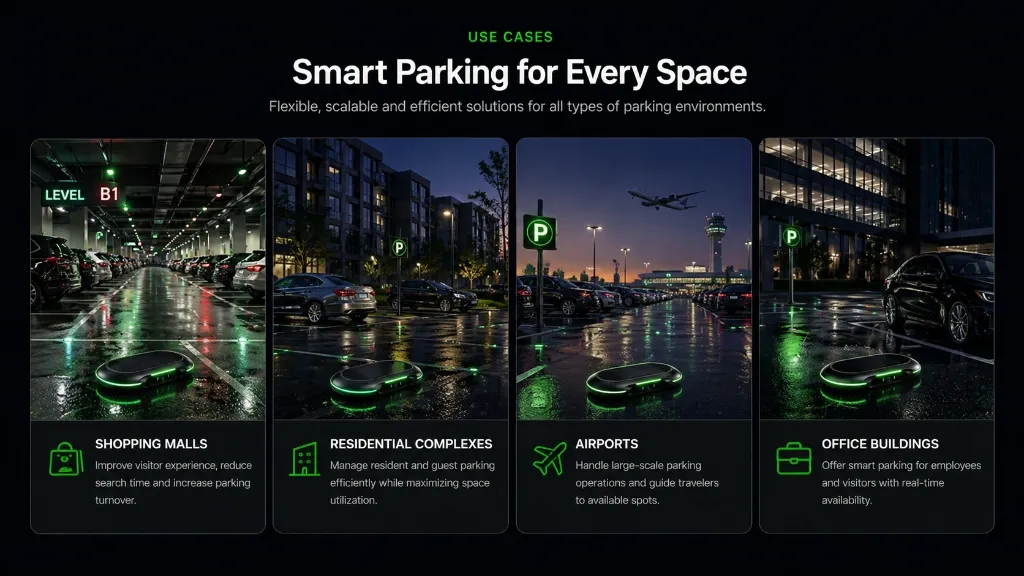
From small private spaces to entire smart cities, intelligent parking systems scale seamlessly to fit any environment.
The Future of Parking
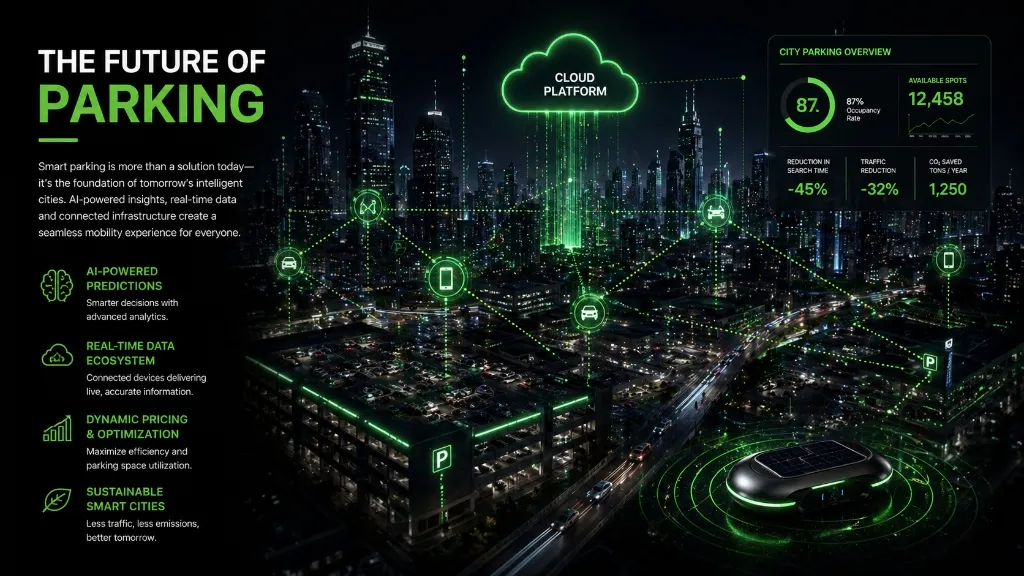
As cities grow and mobility becomes more complex, traditional parking methods are no longer enough. Smart parking systems are evolving with Real-time data, Predictive analytics, Integrated navigation, and Automated systems.
A New Approach to Parking
Most traditional solutions focus on only one part of the problem. A new generation of systems is emerging—bringing everything together into a single, connected ecosystem. This approach combines Detection, Communication, Processing, and User experience into one seamless system.
Conclusion
Smart parking systems are transforming how we interact with urban spaces. They save time, reduce stress, and create more efficient environments for everyone.
As cities move forward, one thing is clear:
Parking is no longer just a space problem—it’s a data problem.
Explore Smart Parking Solutions
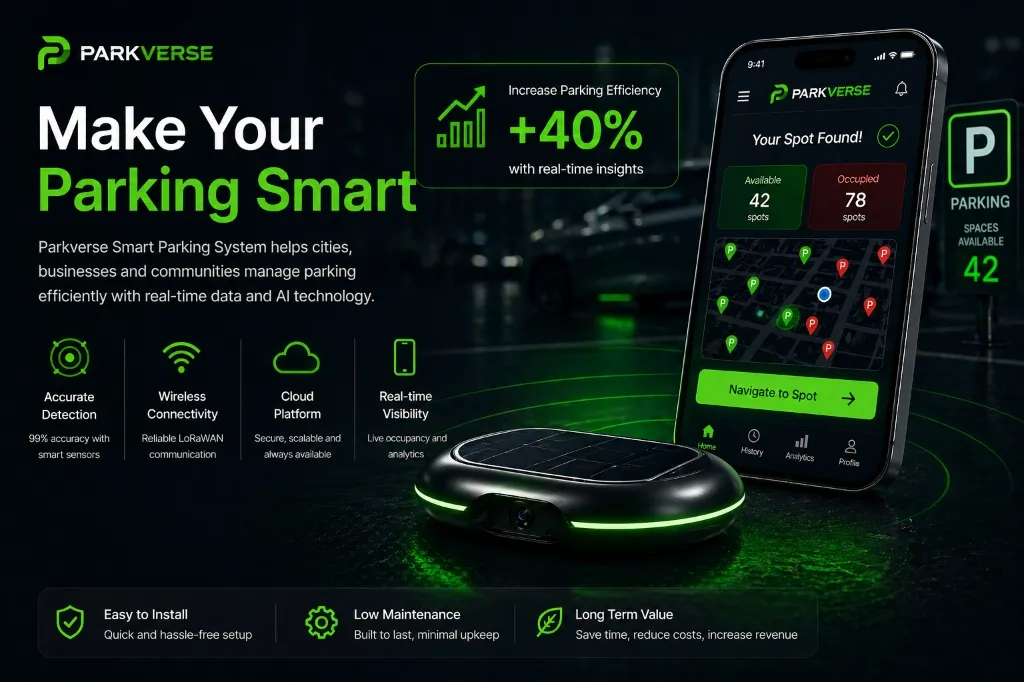
If you’re interested in how smart parking can be applied to real-world scenarios, you can explore modern solutions like PARKVERSE that bring these systems together into one platform.
Make your parking spaces visible.
Request a demo and explore how smart parking can work for your space.
Request Demo →